What Should You Check Before Connecting A New Dryer?
Getting A New Dryer? Check The Existing Vent First
A new dryer is on its way, and the old one’s days of leaving damp towels behind are almost over. At least, that’s the expectation. If restricted venting contributed to the old machine’s trouble, the replacement may inherit the same problem as soon as it is connected.
The exhaust duct stays with the house when an appliance is replaced. Before delivery day, it’s worth arranging a professional assessment of that existing system and confirming what the installer will handle. The following checks apply to conventional dryers that exhaust outdoors, with the new model’s instructions guiding the installation.
Start With The Vent That Is Already There
Look back at why you decided to replace the dryer. If the old machine heated but increasingly needed extra cycles, tell the vent technician about that history. Slow drying can have several causes, and replacing the appliance doesn’t remove lint already sitting in the household duct. A professional can assess the exhaust path before the new machine is put into service.
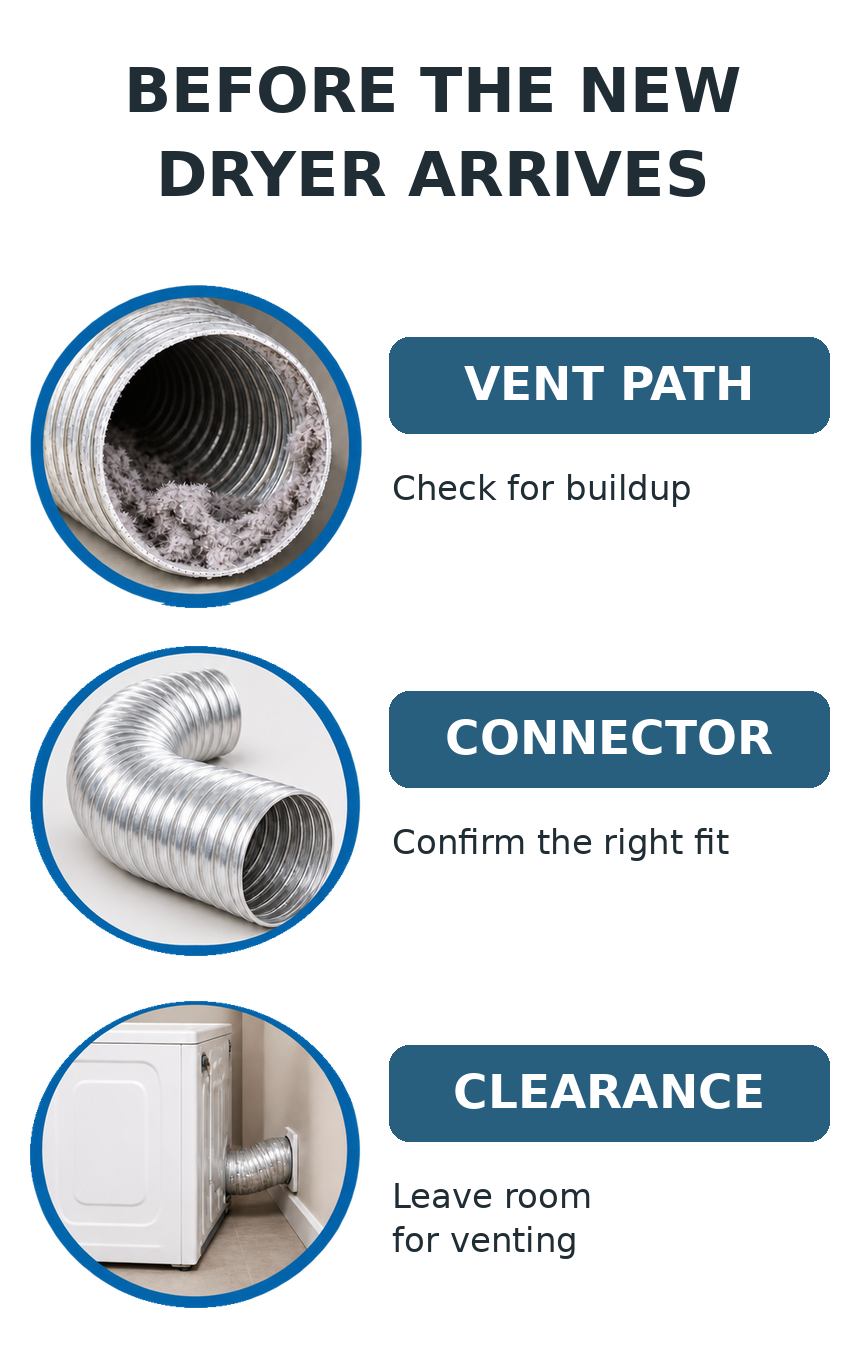
Find any records of previous vent work, including cleaning dates and repairs. If there’s no reliable history, say so instead of assuming the system was maintained. Professional dryer vent cleaning can address an obstructed duct, while an inspection may identify a damaged connector or another condition requiring separate attention.
The route also needs to suit the appliance being installed. Vent length and the number of bends affect airflow, and different models can have different requirements. Ask the installer to compare the existing arrangement with the manufacturer’s installation instructions. The fact that another dryer was connected there doesn’t establish that the new model can use the same setup without changes.
Make this assessment early enough to respond to what it reveals. Finding a problem while the delivery crew is waiting leaves little room to organize additional service. A pre-delivery visit gives you time to decide who will perform any cleaning or repairs, how access will be arranged, and whether the installation date needs adjustment.

Measure For The Connection As Well As The Machine
A dryer can fit between the cabinets and still leave too little room for its exhaust connection. The advertised cabinet depth doesn’t necessarily describe the complete installed depth. Door clearance, protruding fittings, and the connection behind the appliance all deserve a place in the planning. Use the model’s installation dimensions rather than copying the old dryer’s position.
This matters in narrow laundry closets, where pushing the appliance back another inch can look like an easy way to make the door close. That movement may compress the connector. Whirlpool’s venting guidance identifies crushed material behind the dryer as a cause of restricted airflow. Have the installer determine a workable arrangement without forcing the appliance into the available space.
Ask whether a new connector is included and which type will be used. An existing hose shouldn’t be reused simply because it reaches the outlet. Its condition and suitability for the new appliance need checking, and professional transition duct installation can address a connector that is damaged or poorly fitted. The installation instructions should govern material selection and permitted length.
If the dryer will sit in a closet, the enclosure may also need ventilation openings and specified clearances. Those requirements are separate from the exhaust duct carrying moist air outdoors. Give the installer accurate information about the doors and surrounding cabinetry, particularly if the room has been remodeled since the previous dryer was installed.
Confirm The Work Before Delivery Day
Delivery, appliance hookup, and servicing the household vent are not interchangeable descriptions. Ask the retailer or installer exactly what your appointment includes. A package that connects the dryer may not include cleaning a long duct, repairing concealed sections, or replacing an exterior cover. Getting those details in advance helps prevent a task from falling between providers.
The exterior outlet deserves attention even if the laundry room looks ready. Ask the vent technician to assess whether air can exit freely and whether the cover operates properly. A dirty opening may need cleaning; a damaged cover may need replacement. Checking this end of the system avoids concentrating only on the shiny new appliance and its short connector.
Coordinate practical access with everyone involved. Let the provider know if the machines are stacked, the vent terminates high on an exterior wall, or the laundry area is difficult to reach. Confirm who will move or disconnect the old appliance, who will reconnect the new one, and when the vent work can occur. Don’t assume each crew has agreed to the same sequence.
Keep electrical and gas connection questions with the appropriate qualified installer. Dryer vent cleaning is a specific service, and it doesn’t imply that the same technician handles every appliance installation task. If your new purchase changes the fuel type or connection requirements, settle those arrangements before the delivery appointment rather than improvising once the machine arrives.

Check The Finished Installation Before The First Load
Once the appliance is in position, ask the installer to confirm that the exhaust connection remains secure and isn’t pinched behind it. The final position matters, including with the closet door closed where applicable. A connection that looked fine while the machine was pulled forward still needs to work in the space where the dryer will actually run.
Ask what operational checks are included and whether any vent-related concern remains unresolved. Save the installation paperwork alongside the vent service record and the appliance instructions. If a repair has been deferred, get a clear explanation of what needs to happen before use. An unanswered question about the exhaust system is better resolved before you start filling the drum.
When you begin using the dryer, pay attention to persistent damp loads or vent warnings and report them to the installer or service provider. Don’t assume a new machine simply needs time to settle in, and don’t attempt to bypass a warning. With the installation details and vent findings documented, the right professional has a clearer starting point for follow-up.